

It Would Have Been Enough
Storytelling as an Act of Resistance Against Despair and Discontentment

The ancient Jewish people were a storytelling people. When they “gathered in annual rituals to confess their faith in God, they did not formulate abstract creeds and doctrines. They told stories—stories about what God has done.”¹ It was a way of helping them remember.
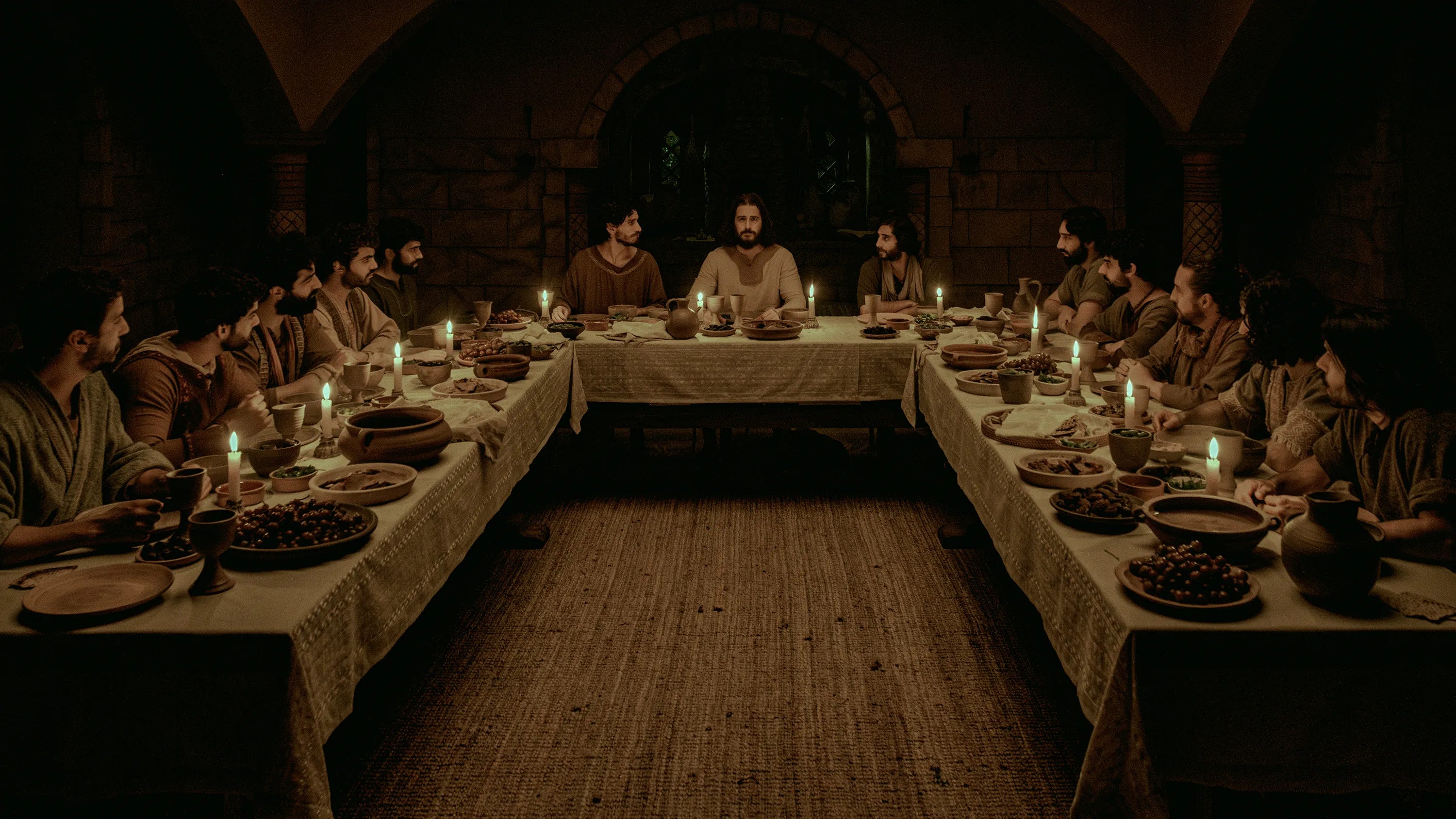
This kind of communal remembering was recently featured on an episode of The Chosen, a multi-season show based on the life of Jesus as seen through the eyes of those who knew and encountered him. Season five focuses entirely on the Last Supper and Jesus’ final discourse with his disciples before his crucifixion.
The disciples had spent three years following Jesus—seeing his miracles, hearing his teaching—yet he still confounded them. They believed he was the Messiah, but he regularly disrupted their expectations of what the Messiah would do when he came. His words had grown increasingly ominous, full of statements about betrayal and his impending suffering and death. And here, as they gathered around the table for the Passover, they still could not understand.
In episode four, one scene in particular captivated me and reminded me why storytelling is an integral part of our faith. As Jesus and his disciples gathered around the table to partake in the Passover meal, they recited the Dayenu (“dye-YAY-noo”), a 15-stanza song traditionally sung at the Passover seder. The Dayenu recounts the Exodus, when God brought the Israelites out of their slavery in Egypt. Each stanza lists an action God performed for the Jewish people during and after the Exodus and concludes with the word dayenu — “it would have been enough.”² For the Jewish people, the Dayenu was, and still is, a way to remember and recount the story of God’s faithfulness to them.
The Dayenu scene in this episode is gripping. Everything about it communicated the gravity of the moment. The room was lit only by oil lamps. The flickering light cast shadows across the disciples’ faces. The camera moved slowly from one disciple to another as each took his turn reciting a stanza, panning in close enough to see the furrow in their brows and the mix of ambiguous grief and uncertainty in their eyes. The pacing is deliberate, allowing the weight of each statement to land:
If He had taken us out of Egypt and not made judgments on them [the Egyptians]…
It would have been enough.
If He had made judgments on them and had not made [them] on their gods…
It would have been enough.
If He had destroyed their idols and had not given us their wealth…
It would have been enough.
If He had given us their wealth and had not split the sea for us…
It would have been enough.
If He had split the sea for us and had not taken us through it on dry land…
It would have been enough.
On it went for fifteen stanzas, each one building upon the one before it, recounting God’s specific acts of faithfulness and rooting them in the magnitude of God’s kindness to them. The perspective inherent within the Dayenu disrupts a sense of entitlement and calls the Jewish people to a posture of gratitude before God. If God had only committed one of these acts, and nothing else, he had already done more than enough.
This kind of progressive storytelling also served another purpose: it reminded them that at each stage of the Exodus, God was at work. The story wasn’t over. And it grounded them in their current story, reminding them that, no matter their circumstances as a people, God was still at work. That story wasn’t over yet, either, even if they couldn’t yet see the path forward.
The traditional Dayenu tells an ancient story about a collective people. But the creators of The Chosen carried it a step further. They made it personal, showing Jesus gathered at a different table with his female disciples—each woman recounting not what God did for Israel, but what Jesus did for her:
Mother Mary: If I had only been given the joy of holding you in my arms and you had not performed signs and wonders…
It would have been enough.
Mary Magdalene: If you had only performed signs and wonders and not called me by name…
It would have been enough.
Eden (Peter’s Wife): If you had only healed Mary of demons and not called my husband…
It would have been enough.
And so it continued around the table as each woman recounted her personal, life-transforming encounter with Jesus. The personalized Dayenu that the women shared with Jesus reminds us that Jesus did not only come to rescue a specific people group. He came to rescue individual men and women, each with their own stories of suffering and need.
Watching these two scenes captured my imagination and compelled me to create two of my own Dayenu pieces: one that recounts our collective Gospel story and one that recounts my personal encounter with Christ.
I started with our collective story, the grand narrative God has invited us all into.
Telling Our Gospel Story
1. If you created the earth, sun, moon, stars, and all the heavenly hosts, it would have been enough.
2. If you created all of heaven and earth, but did not create us in your image, it would have been enough.
3. If you created us in your image, but did not walk in fellowship with us, it would have been enough.
4. If you walked in fellowship with us, but did not come for us when we hid in our sin, it would have been enough.
5. If you sought us in our sin, but did not cover our nakedness and promise to send one who would crush the serpent, it would have been enough.
6. If you promised to send one who would crush the serpent, but did not send us prophets and priests to guide us, it would have been enough.
7. If you sent us prophets and priests, but did not become flesh and dwell among us, it would have been enough.
8. If you became flesh and dwelt among us, but did not invite us to follow you, it would have been enough.
9. If you invited us to follow you, but did not suffer and die in our place, it would have been enough.
10. If you suffered and died for us, but did not rise from the dead and take your place at God’s right hand, it would have been enough.
11. If you took your place at God’s right hand as Christ the King, but did not forgive our sin and take away shame, it would have been enough.
12. If you forgave us and removed our shame, but did not clothe us in Christ’s righteousness, it would have been enough.
13. If you clothed us in Christ’s righteousness, but did not adopt us as your children and make us co-heirs with Christ, it would have been enough.
14. If you adopted us and made us co-heirs with Christ, but did not give us the Holy Spirit to dwell within us, it would have been enough.
15. If you gave the Holy Spirit to dwell within us, but did not promise to heal all wounds and make all things new, it would have been enough.
16. If you promised to make all things new, but did not promise your eternal presence with us in the new creation, it would have been enough.
At every point, you could have stopped. And at every point, it would have been enough. But at every point, you gave lavishly more.
But the Gospel isn’t just a story about all of us—it’s a story for each of us. For me. For you. The infinite God became intimate when he met me on my dad’s couch after a three-day drug binge. He spoke to me in a way that was undeniable, telling me it was time to get sober. Six years into sobriety, he met me again. This time on my back deck, calling me to surrender and follow Jesus after years of knowing about him but resisting knowing him.
That’s where my personal Dayenu begins. Not in a life well-lived, but in the wreckage of my own choices. Not in slavery to a foreign nation, but in slavery to my own sin and suffering. And that is precisely where God chose to meet me.
Telling My Personal Story
1. If you had rescued me from drug addiction, but did not spare me from serving prison time, it would have been enough.
2. If you had spared me from time in prison, but did not spare me from life-altering diseases, it would have been enough.
3. If you spared me from life-altering diseases, but did not provide a recovery community to support and guide me, it would have been enough.
4. If you gave me a recovery community, but did not restore relationships with my family, it would have been enough.
5. If you restored relationships with my family, but did not restore and repair my reputation in the community, it would have been enough.
6. If you made me a respectable member of society, but did not allow me to build a personal relationship with you apart from religious contexts, it would have been enough.
7. If you allowed me to encounter you apart from religious contexts, but did not send people to invite me to church, it would have been enough.
8. If you sent people to invite me to church, but did not pursue me through worship music, it would have been enough.
9. If you pursued me through worship music, but did not reveal the Scriptures to me in recovery language, it would have been enough.
10. If you helped me understand the Scriptures through the lens of recovery, but did not soften my heart to believe and receive the gospel, it would have been enough.
11. If you planted the seeds of the gospel in my heart and produced the fruit of faith, but you did not forgive my sins and cover over my shame, it would have been enough.
12. If you forgave my sins and covered my shame, but did not use them as a platform for sharing the hope, healing, and freedom found in you, it would have been enough.
13. If you used my story of sin and shame to help others, but did not continue to transform me into your image, it would have been enough.
14. If you continued to transform me into your image, but did not grant me rich fellowship with other believers, it would have been enough.
15. If you granted me fellowship with other believers, but did not draw near to me personally, it would have been enough.
16. If you drew near to me personally, but did not promise to hold fast to me unto the end, it would have been enough.
17. If you promised to hold fast to me to the end, but did not promise a day when I would get to see you face to face, it would have been enough.
At every point, you have been more than faithful.
Dayenu, Lord. It is enough.
Remembering is not passive nostalgia. It is an active story-shaped trust in a God whose work is never finished. Storytelling is our act of resistance in a dark world that tempts us toward despair and discontentment.
Engaging in this kind of storytelling roots our remembrance and grounds our gratitude. It recognizes that at every stage, our story isn’t over. God is still at work. He has been faithful thus far. And he will be faithful to the end.
Love,
CC
P.S. I created a printable PDF of Telling Our Gospel Story. You can download it here.
¹ https://www.americanbible.org/engage/bible-resources/articles/storytelling-in-antiquity/
² https://www.myjewishlearning.com/article/dayenu-it-would-have-been-enough/
Questions for Reflection
Engage the Scripture
In Deuteronomy 8:2-18, Moses retells the Israelites their story. What does he call them to remember? What warning does he give them?
Read Psalm 105. List out all the ways God moved on behalf of the Israelites in this psalm.
Read over your list from Psalm 105. How does seeing all of the ways God acted encourage you in your own personal story?
Explore Your Story
The article ends by describing storytelling as “our act of resistance in a dark world that tempts us toward despair and discontentment.” What specific despair or discontentment are you facing right now? How might remembering and recounting God’s faithfulness serve as resistance against these temptations?
God met me “not in a life well-lived, but in the wreckage of my own choices.” How does this challenge narratives that require you to “clean yourself up” before coming to God? Where in your own story has God met you in brokenness rather than strength?
The Dayenu “rebuts a sense of entitlement and calls the Jewish people to a posture of gratitude before God.” In what areas of your life do you struggle with entitlement or discontentment? How might regularly recounting God’s faithfulness cultivate deeper gratitude?
Encounter the Savior
Watch this scene from The Chosen, where the women share how Jesus personally transformed their lives. Imagine sitting at that table with Jesus. What would you say to him about how he has changed your story? Take time in prayer to speak these things directly to him.
Write your own personal Dayenu. Begin with the first significant encounter with God’s grace in your life, then progressively move through the ways he has continued to work. Let each stanza end with “it would have been enough.” Don’t rush this exercise—allow yourself time to remember and to marvel at what God has given.
Reread your personal Dayenu. What patterns of God’s faithfulness emerge? How could regularly retelling your story help ground you in gratitude and resist discontentment and despair?
Advent
Even though Advent began on November 30th, it’s not too late to get the WholeHearted Advent study, Encountering Jesus in John. It’s available in paperback here or PDF download here.
Here is a clip from Week 2 of the study:
The Wholehearted Project is reader-supported.
If you enjoy or have benefited from the content, would you consider supporting future content in a few ways:
Like or comment below. I love hearing from you!
Become a financial supporter through a one-time gift at Buy Me A Coffee or a recurring supporter at Liberapay.
Share this newsletter with others:
Subscribe to receive regular updates:
Want to Connect?
You can find me on Facebook and Instagram.
You can find more resources on the Wholehearted Project website.
Or send me a direct message:
I love you work Chrystie! Keep me posted on other studies.
xoxo
Maria